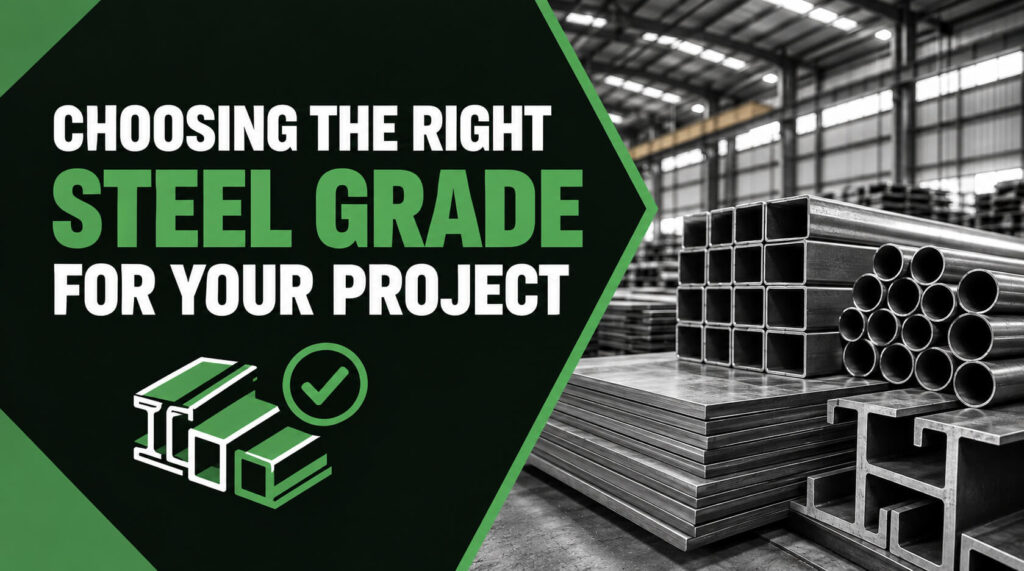
Choosing the right steel grade is one of the most important decisions when planning a construction, fabrication, or engineering project. The correct grade can improve structural performance, durability, fabrication efficiency, and overall project costs. With so many steel grades and specifications available, it can be difficult to know which option is best for your application. The right choice depends on factors such as strength, durability, environmental conditions, fabrication requirements, and the intended use of the steel. In this guide, we’ll look at the key factors you should consider when selecting a steel grade for your next project.
What Is a Steel Grade?
A steel grade identifies the properties and characteristics of a particular type of steel. Different grades are manufactured to meet different requirements for strength, toughness, weldability, corrosion resistance, and other performance characteristics.
For example, structural steel used in building frames may have different requirements from steel used for machinery, outdoor structures, tanks, or specialised fabrication.
Choosing a grade simply because it is stronger or more readily available does not always mean it is the best choice. The steel needs to match the specific requirements of the project.
1. Consider the Strength Requirements
One of the first things to determine is how much load the steel needs to support.
Structural applications may require steel with specific yield strength and tensile strength characteristics. If the material is being used for beams, columns, frames, platforms, or other load-bearing components, selecting an appropriate grade is essential.
Your engineer or structural designer can determine the required material properties based on the project’s design and loading conditions.
The goal isn’t simply to choose the strongest steel available—it’s to choose a grade that provides the required performance efficiently and economically.
2. Think About the Environment
Where the steel will be used can have a major impact on material selection.
Steel exposed to:
- Rain and moisture
- Coastal environments
- High humidity
- Chemicals
- Industrial conditions
- Outdoor weather
- Extreme temperatures
may require additional protection or a suitable material specification.
For projects in coastal areas of Australia, for example, environmental exposure should be carefully considered when determining the appropriate steel and protective coating system.
Depending on the application, options such as galvanising, painting, protective coatings, or other corrosion-control measures may be required.
3. Check Weldability and Fabrication Requirements
Not every steel grade behaves the same way during fabrication.
If your project involves cutting, drilling, bending, welding, or machining, the steel grade needs to be compatible with the proposed fabrication processes.
Weldability is particularly important. The chemical composition and properties of the steel can affect welding procedures and the risk of issues such as cracking or distortion.
Before ordering material, discuss your fabrication requirements with your steel supplier or fabricator. This can help ensure that the selected grade is suitable for the manufacturing process.
4. Consider Toughness and Durability
Strength is only one part of steel performance.
For certain applications, toughness and resistance to impact or temperature-related conditions can also be important. Components operating in demanding environments may require specific material properties to maintain reliable performance throughout their service life.
Think about how the steel will be used, what loads it will experience, and what environmental conditions it will encounter.
5. Consider Availability and Project Lead Times
The ideal steel grade on paper may not always be the most practical option if it is difficult to source.
Before finalising your material selection, check:
- Availability
- Required quantities
- Standard sizes
- Supplier lead times
- Delivery requirements
- Certification requirements
- Fabrication requirements
Selecting an appropriate and readily available grade can help prevent unnecessary delays and keep your project moving.
6. Understand the Applicable Australian Standards
Steel selection should always be based on the relevant project specifications and applicable Australian Standards.
Depending on the application, different standards may apply to structural steel products, fabrication, welding, coatings, or other aspects of the project.
Rather than relying solely on a generic steel grade name, make sure the material supplied meets the specifications required by your engineer, designer, builder, or project documentation.
When in doubt, always confirm the required steel specification with a qualified engineer or experienced steel supplier before placing your order.
7. Balance Performance and Cost
Choosing the right steel isn’t only about material price.
A lower-cost material may not necessarily provide the best overall value if it results in:
- Additional fabrication requirements
- Longer lead times
- More complicated welding procedures
- Increased wastage
- Additional protective treatment
- Higher maintenance requirements
The best solution considers the total project cost, including material, fabrication, transport, installation, maintenance, and expected service life.
Common Steel Selection Mistakes to Avoid
When selecting steel for a project, avoid these common mistakes:
Choosing Based Only on Price
The cheapest material may not provide the required performance or availability.
Assuming All Steel Is the Same
Different grades can have significantly different mechanical and fabrication properties.
Ignoring the Project Environment
Moisture, salt, chemicals, and outdoor exposure can affect long-term steel performance.
Selecting Material Without Checking Fabrication Requirements
A grade that isn’t suitable for your planned welding or fabrication process can create unnecessary complications.
Ordering Before Confirming Specifications
Always verify the required grade, dimensions, standards, quantity, and certification requirements before ordering.
How to Choose the Right Steel Grade
A simple way to approach steel selection is to work through these questions:
1. What will the steel be used for?
Determine whether it is for structural, architectural, industrial, machinery, or another application.
2. What loads will it experience?
Consider structural and mechanical requirements.
3. Where will it be installed?
Assess indoor, outdoor, coastal, wet, chemical, or industrial exposure.
4. How will it be fabricated?
Consider cutting, welding, drilling, bending, machining, and finishing.
5. What standards and specifications apply?
Check the project drawings, engineering documentation, and relevant Australian requirements.
6. Is the material readily available?
Confirm stock, sizes, quantities, lead times, and delivery requirements.
7. What is the total project cost?
Consider more than the initial price of the steel.
Final Thoughts
Selecting the right steel grade can have a significant impact on the strength, durability, fabrication, cost, and performance of your project.
The best choice depends on the specific application rather than simply selecting the strongest or cheapest available material. By considering structural requirements, environmental exposure, fabrication methods, applicable standards, availability, and total project costs, you can make a more informed decision.
If you’re unsure which steel specification is suitable for your project, speak with an experienced steel supplier or qualified engineer before ordering your materials.
Need Steel for Your Next Project?
At Wiseman Budget Steel, we can help you find suitable steel products for your project requirements. Contact our team to discuss your material requirements, sizes, quantities, and delivery needs.
Choose the right steel. Build with confidence.